
The Gobi Desert in Mongolia is not just a landscape of sand. It is an immense, mineral and ever-changing world where dunes give way to red cliffs, canyons open into gravel plains, and nomadic camps appear beside tracks that seem to disappear into the sky.
A Gobi Desert trip has a feeling of its own: rawer, quieter and never empty. You meet Bactrian camels, walk through the cool gorge of Yolyn Am, watch the sun fall on Bayanzag, then sleep in a ger while the wind moves across the desert steppe.
For travelers looking for a memorable route, a Gobi Desert Mongolia tour is often one of the highlights of the country. Here is what to see, when to go, how long to plan and how to include the Gobi in a private journey with Amar Mongolia.
Why does the Gobi Desert feel so unforgettable?
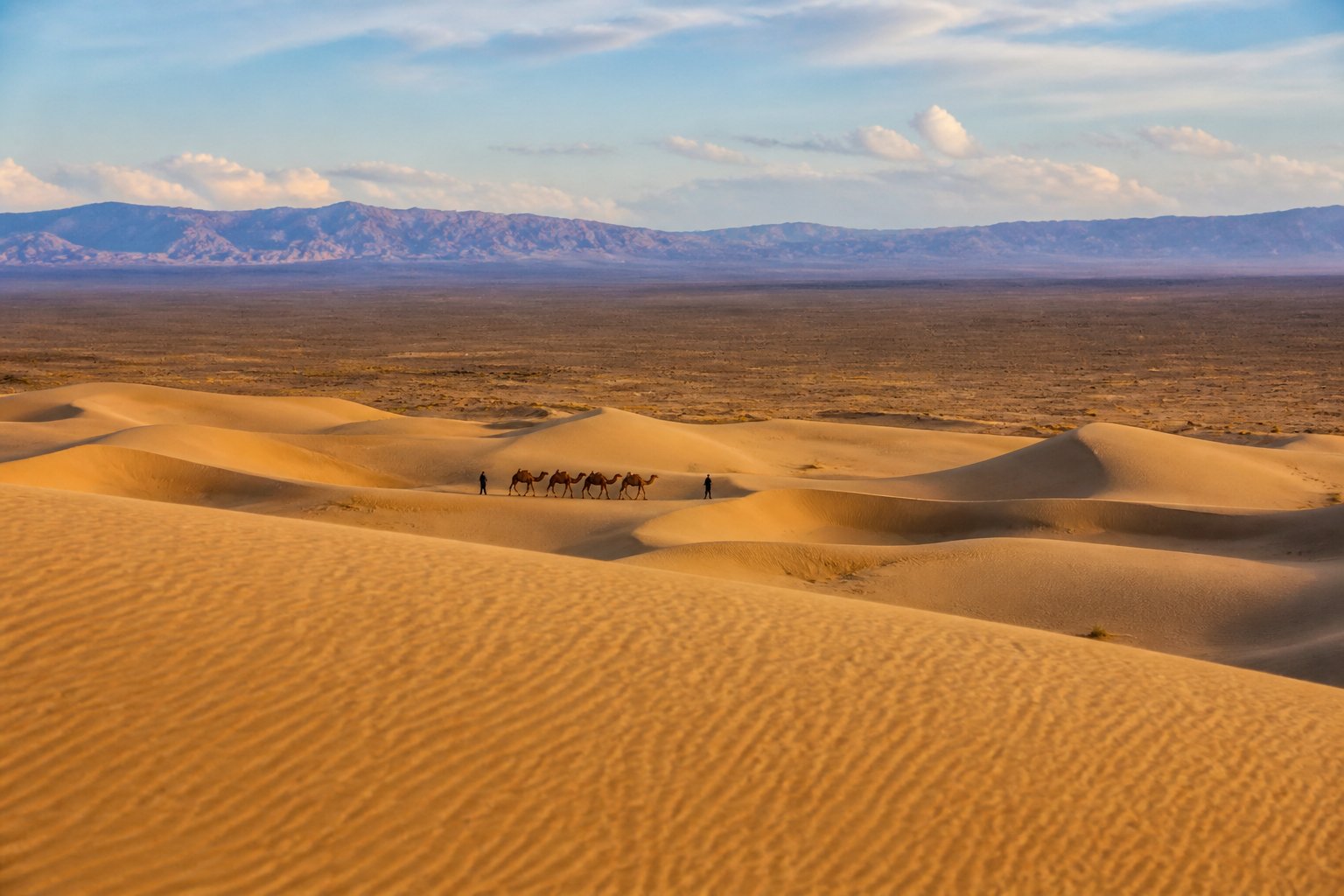
The Gobi surprises many travelers because it does not match the usual idea of a desert. Yes, there are spectacular sand dunes, especially at Khongor, but they are only one part of the story. The region also holds plateaus, canyons, cliffs, rocky tracks, dry mountains and immense open horizons.
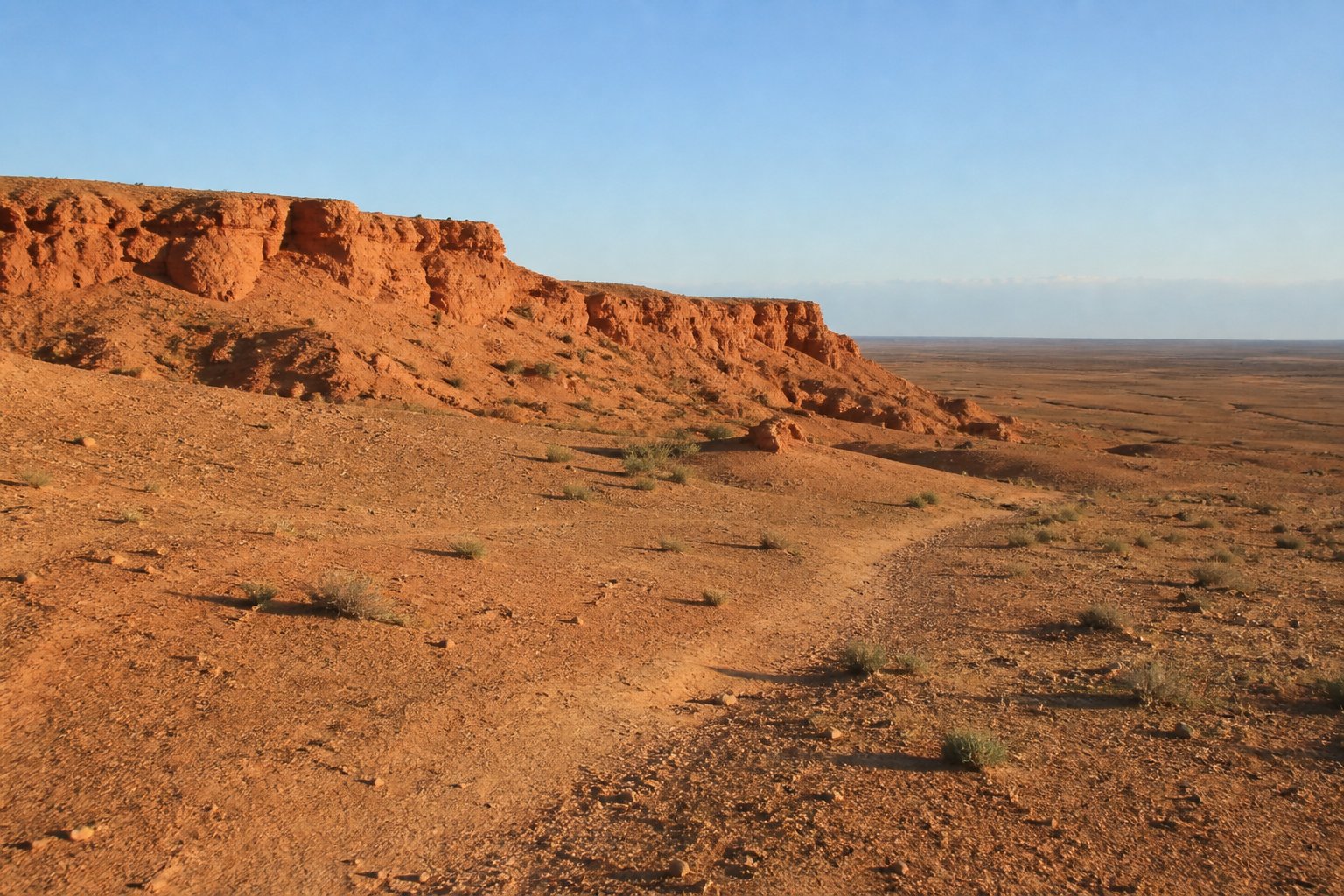
That diversity makes every day feel different. In the morning, you may walk inside a gorge that still holds cool air. In the afternoon, you cross a golden plain. In the evening, the Flaming Cliffs of Bayanzag turn deep red in low light. The Gobi gives you the feeling of being far from everything without ever feeling lifeless.
It is also a region of encounters. Nomadic families live with their herds, move their camps with the seasons and keep a precise relationship with water, wind, animals and distance. Traveling here with a local agency in Mongolia helps you understand those details instead of only passing through the scenery.
What should you see in the Gobi Desert in Mongolia?
A good Gobi itinerary combines several landscapes instead of rushing toward one famous place. Distances are long, but they are part of the experience: the road helps you feel the scale of Mongolia and watch the scenery change little by little.
The Khongor sand dunes
Khongoryn Els is one of southern Mongolia's most powerful images: a long chain of dunes stretching below the mountains. Travelers come to walk along the ridges, enjoy the evening light and meet families living with camels.
Bayanzag, the Flaming Cliffs
The Bayanzag cliffs bring a red, almost cinematic atmosphere to the Gobi. At sunset, the formations glow intensely and create one of the most contemplative stops on the journey.
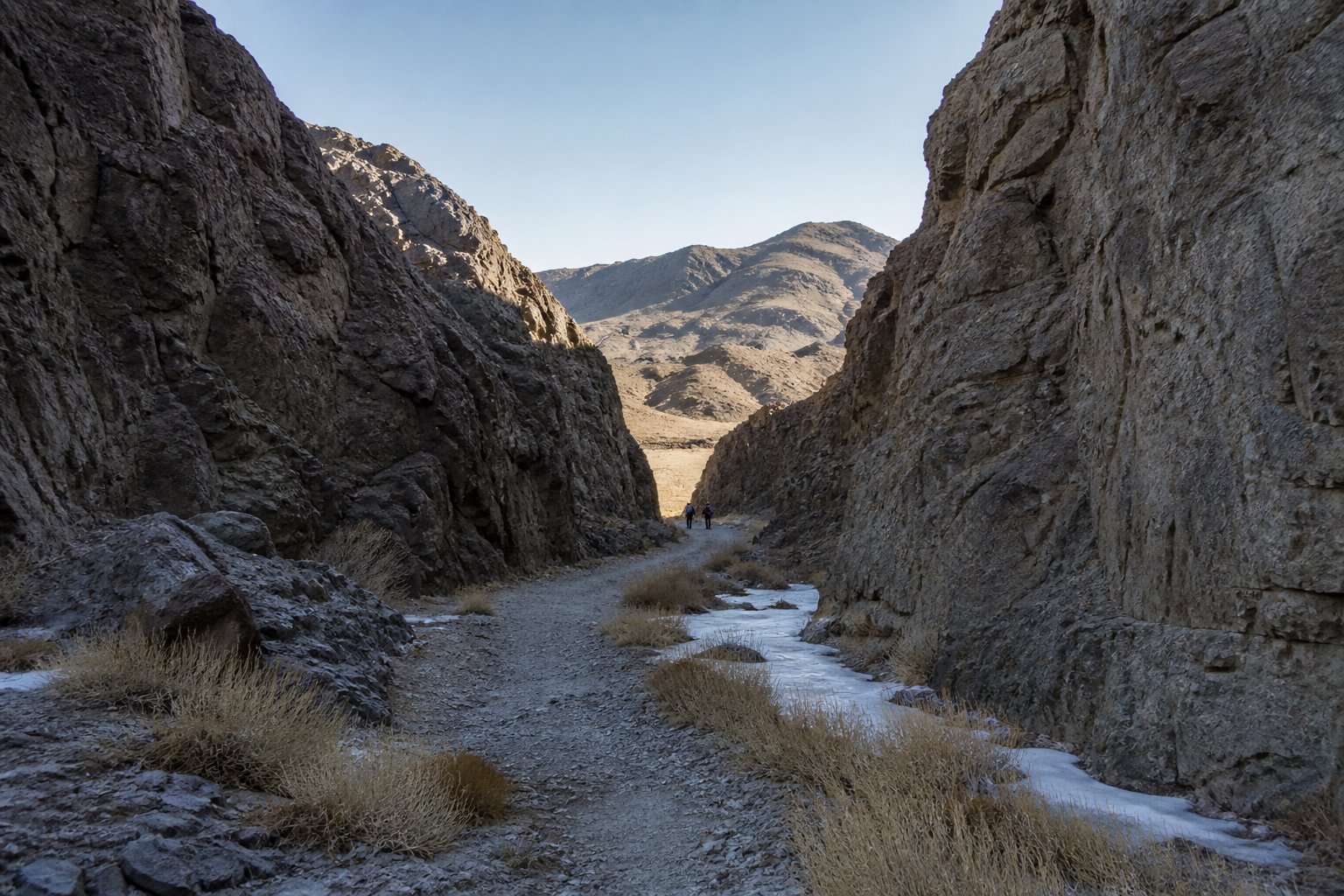
Yolyn Am, the cool gorge of the Gobi
Inside Gobi Gurvan Saikhan National Park, Yolyn Am contrasts with the hot open plains. Walking through the gorge reveals another side of the Gobi: rocky, shaded and more intimate.
"In the Gobi, silence is never empty. It simply gives the landscape more room."
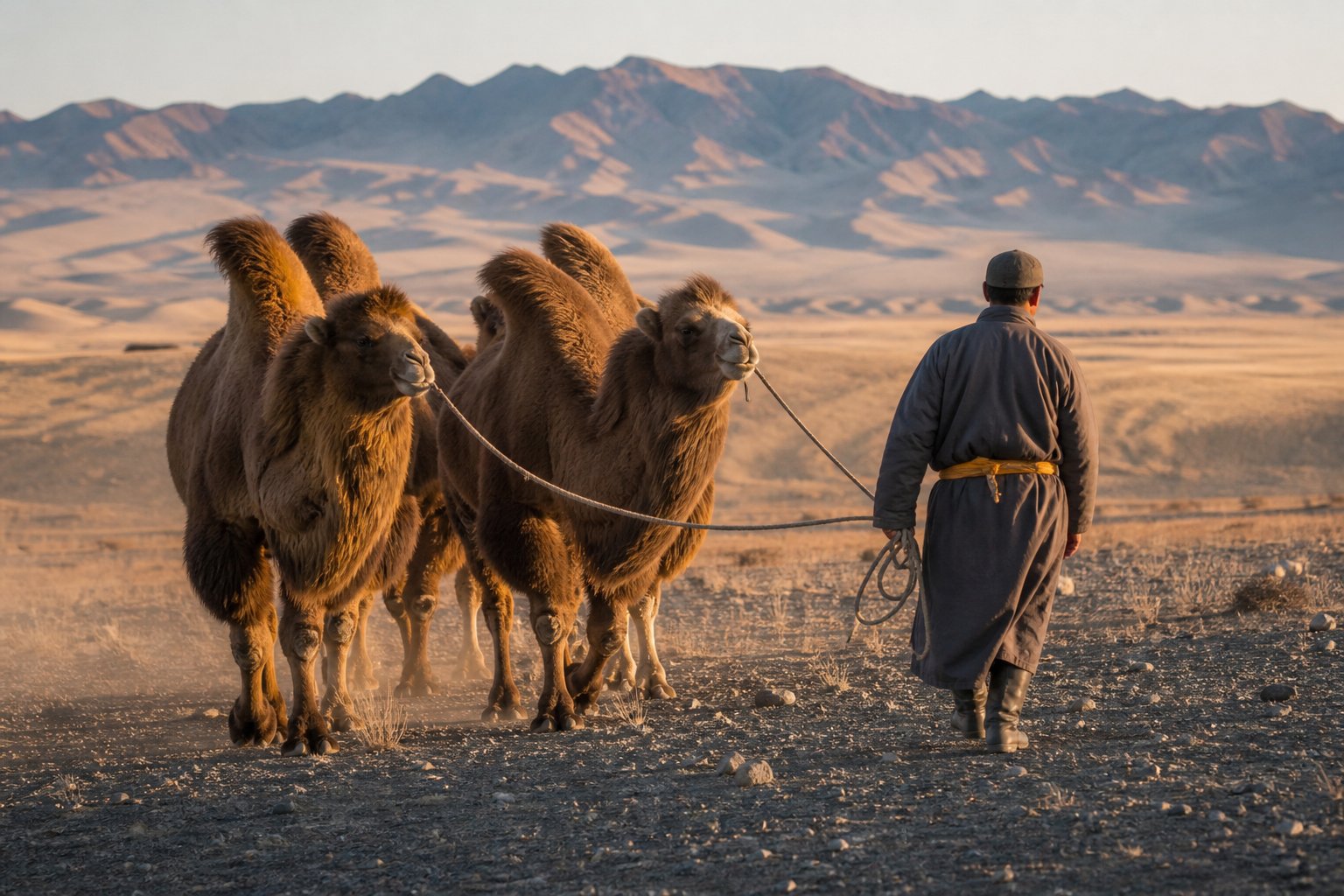
Bactrian camels and nomadic families of the Gobi
A Gobi Desert trip gains its real depth when it moves beyond viewpoints and into encounters. Bactrian camels are perfectly adapted to the conditions of southern Mongolia. Their presence immediately defines the desert, but it also tells the story of a way of life.
Spending a night near a camp, sharing tea, understanding how a family organizes its movements or manages water changes the way you look at the Gobi. You no longer see only a spectacular region. You begin to understand a demanding, inhabited and living territory.
Our tours favor these human pauses whenever possible, always with respect for the local rhythm. A successful journey through the Gobi is not about seeing everything quickly. It is about giving each place enough time to exist.
How should you plan a Gobi Desert tour?
The Gobi requires careful planning. Stages are long, some tracks change with the weather, and accommodation varies between ger camps, nomadic families and simpler lodgings depending on the area. This is where a private tour with a driver and local guide makes a real difference.
For a first discovery, plan at least 6 to 8 days from Ulaanbaatar. For a richer and more comfortable journey, 10 to 14 days let you combine the Gobi with the central steppe, Orkhon Valley or the Khangai Mountains.
For the essential Gobi highlights
A focused itinerary through southern Mongolia's major landscapes: dunes, cliffs, canyons and desert atmosphere.
See The three wonders of Gobi →For steppe and desert together
A balanced route linking central nomadic valleys with the mineral spaces of the Gobi.
See From the steppes to the Gobi desert →For a more active Gobi
A more adventurous approach, with walking, remote scenery and a rhythm closer to the land.
See Trekking and the mystery of Gobi →For a tailor-made journey
Choose a base itinerary, then adapt the duration, comfort, pace and activities with our local team.
See all our tours →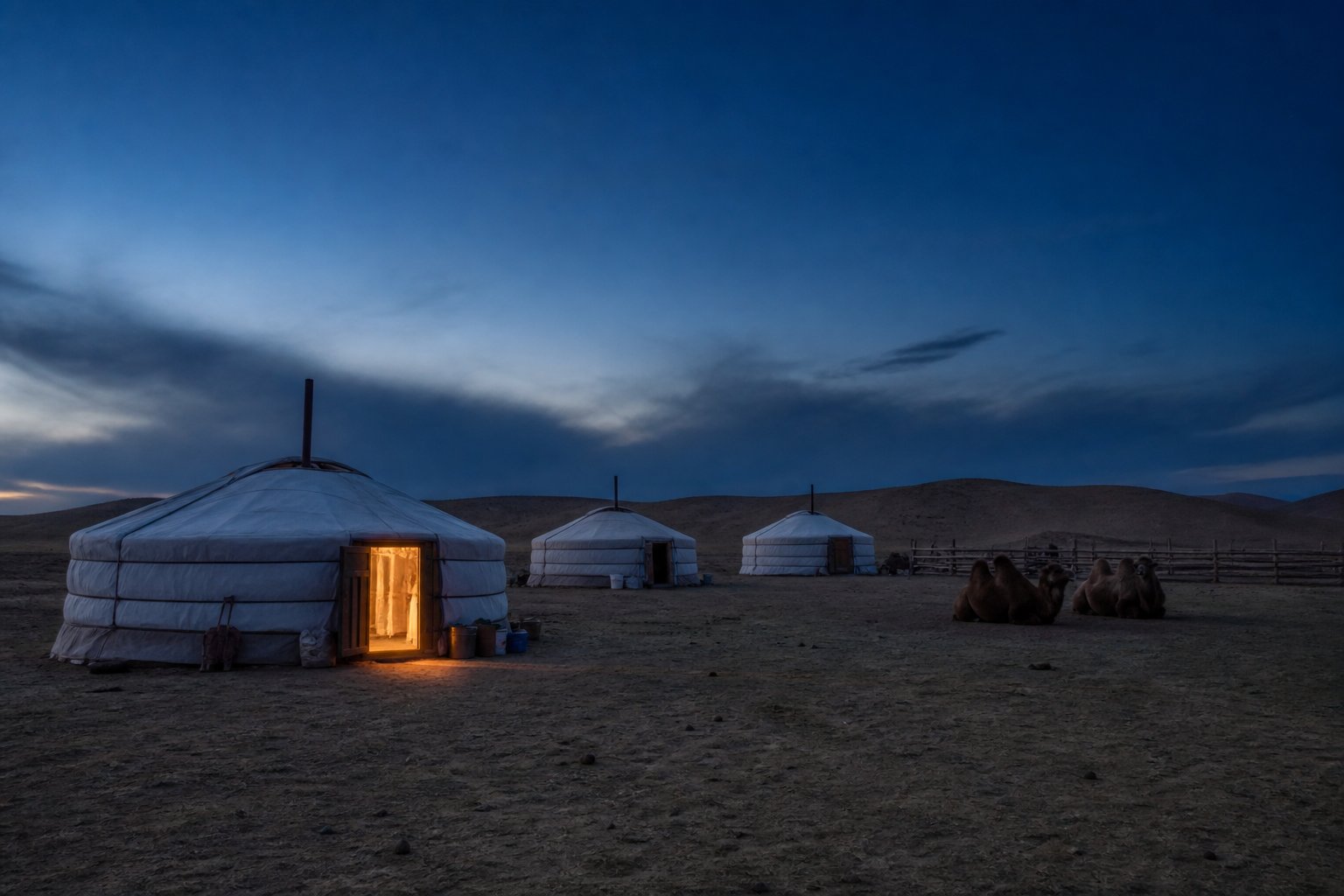
When is the best time to visit the Gobi Desert?
May, June, September and early October are often the most pleasant months for a Gobi Desert trip. The light is beautiful, temperatures are generally milder and the landscapes are easier to enjoy.
July and August remain possible, especially on a well-organized tour, but some days can be very hot. In winter, the Gobi becomes harsher and quieter: it is a powerful experience, but it requires specific preparation.
If you are choosing between seasons, our best season to come to Mongolia guide can help you decide according to your pace, comfort and the landscapes you want to experience.
Gobi Desert Mongolia FAQ
What should I see in the Gobi Desert in Mongolia?
The most memorable sites are the Khongor sand dunes, the red Bayanzag Flaming Cliffs, Yolyn Am canyon, open desert plains and nomadic camps where families live with their Bactrian camels.
How many days do I need to visit the Gobi?
For a first discovery, plan at least 6 to 8 days from Ulaanbaatar. If you want more comfort, meaningful encounters and a route combining the Gobi with central Mongolia, 10 to 14 days work better.
Can I book a tailor-made Gobi Desert tour?
Yes. Amar Mongolia can privatize and adapt a Gobi tour according to the season, comfort level, activities, travel pace and number of travelers.
Ready to experience the Gobi differently?
Choose a Gobi tour, combine it with the steppe or build a private itinerary adapted to your season, pace and wish for real encounters.
"The Gobi is not only visited. It is crossed, listened to and slowly understood."